
Essential Tools for a Small Kitchen
A small kitchen can be efficient, comfortable, and enjoyable to use when every tool has a purpose. Instead of filling cabinets with single-use gadgets, focus on versatile items that help with several tasks. The right tools can make meal preparation faster, cleanup easier, and storage more manageable.
Whether you are setting up your first apartment or improving a compact kitchen, this guide covers the essential tools worth making room for.
Start With a Few Versatile Basics
The best tools for a small kitchen are useful for many different recipes. A chef’s knife, cutting board, skillet, and saucepan can handle a surprising number of cooking tasks.
Chef’s knife
A good chef’s knife is one of the most useful tools in any kitchen. It can chop vegetables, slice meat, mince herbs, and prepare fruit. Choose a comfortable knife with a medium-sized blade that feels balanced in your hand.
You may also want a small paring knife for peeling and trimming. However, you do not need a large knife collection to prepare everyday meals.
Cutting board
Choose a cutting board that fits comfortably on your counter without taking over the workspace. A medium-sized board is usually large enough for most tasks while remaining easy to store.
A board with a handle or hanging hole can be stored on a wall or inside a cabinet door. If possible, use separate boards for raw proteins and produce to make food preparation more organized.
Mixing bowls
A set of nesting mixing bowls saves valuable cabinet space. Look for bowls that fit inside one another and have stable bases. Stainless steel, glass, and durable plastic are all practical choices.
Mixing bowls can be used for preparing ingredients, tossing salads, mixing batters, storing leftovers, and serving food. A bowl with a lid is especially helpful in a small kitchen because it can move directly from preparation to storage.
Choose Cookware That Does More
Limited storage space makes multi-purpose cookware especially valuable. A few carefully chosen pans can replace a crowded collection.
Nonstick skillet
A nonstick skillet is useful for eggs, pancakes, vegetables, fish, and quick stir-fries. Choose a size that fits your cooktop and leaves enough room to prepare a meal without overcrowding.
A skillet with a comfortable handle and a lid is even more practical. The lid helps retain heat, reduce splattering, and finish cooking foods evenly.
Small saucepan
A saucepan is useful for cooking grains, warming soup, making sauces, and boiling vegetables. A medium-sized saucepan with a lid can handle many everyday recipes without taking up much cabinet space.
Dutch oven or heavy pot
If your kitchen has room for one larger pot, consider a Dutch oven or another heavy, wide pot. It can be used for soups, stews, pasta, braised dishes, and one-pot meals.
A heavy pot distributes heat well and can often move from the stovetop to the oven. If weight is a concern, choose a lighter model that is easier to lift and clean.
Sheet pan
A sheet pan supports simple meals with minimal cleanup. Use it to roast vegetables, bake chicken, prepare toasted sandwiches, or make cookies.
Choose a rimmed sheet pan so sauces and cooking juices stay contained. If storage is limited, store the pan vertically beside a cutting board or inside the oven when the oven is not in use.
Add Simple Preparation Tools
Small preparation tools can save time, but select only the ones you will use regularly.
Measuring cups and spoons
Accurate measuring tools are useful for baking, sauces, dressings, and following recipes. Look for measuring cups that stack together and spoons that clip or nest neatly.
A liquid measuring cup is helpful for water, milk, oil, and other liquids. A set of dry measuring cups works best for flour, sugar, grains, and similar ingredients.
Box grater
A box grater can shred cheese, grate vegetables, zest citrus, and create fine crumbs. It replaces several specialized tools and is easy to store in a cabinet.
If cabinet space is extremely limited, a flat handheld grater may be a better choice. It takes up less room and can be stored in a drawer.
Colander
A compact colander is essential for draining pasta, rinsing produce, and washing grains. A collapsible model can save significant storage space.
Choose a colander with sturdy handles that rest securely over your sink or pot. This makes draining easier when counter space is limited.
Kitchen shears
Kitchen shears can cut herbs, trim vegetables, open food packages, and divide poultry. They are often more convenient than a knife for small tasks.
Look for shears that come apart for cleaning. Store them in a drawer or on a magnetic strip, depending on your kitchen layout.
Keep Handy Tools Within Reach
A few compact tools make everyday cooking easier without requiring much storage.
Useful choices include:
– A flexible silicone spatula for scraping bowls and folding ingredients
– A wooden spoon for stirring soups, sauces, and grains
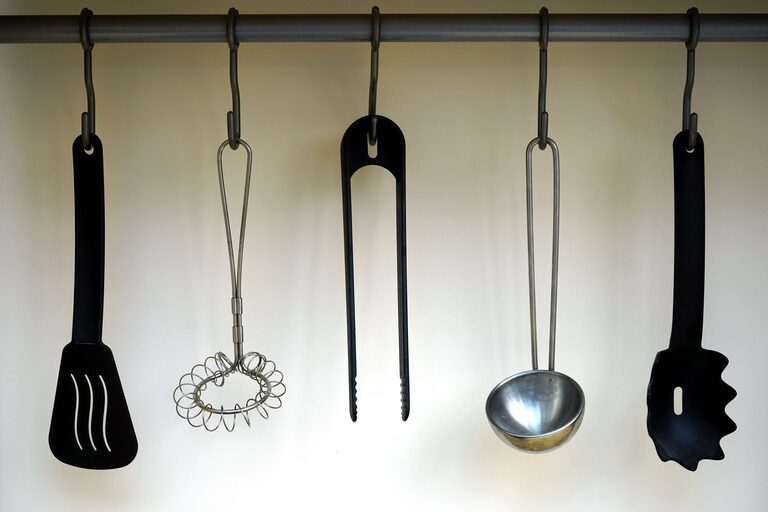
– A pair of heat-resistant tongs for turning and serving food
– A whisk for eggs, dressings, and smooth sauces
– A vegetable peeler for potatoes, carrots, and apples
– A can opener for canned beans, tomatoes, and other pantry staples
– A ladle for serving soups and stews
– A slotted spoon for lifting food from water or cooking liquid
You may not need every item immediately. Start with the tools that match your cooking habits, then add others as needed.
Consider One or Two Space-Saving Appliances
Small appliances can be helpful, but they can also quickly fill limited counter space. Before buying one, consider how often you will use it and where it will be stored.
Compact blender
A small blender can prepare smoothies, sauces, soups, and dressings. An immersion blender is another practical option because it can blend directly in a pot or container and usually takes up less room.
Toaster oven
A toaster oven can toast bread, reheat food, roast small portions, and bake simple dishes. It may be useful if you do not want to heat a full-size oven for small meals.
Electric kettle
An electric kettle quickly heats water for tea, coffee, instant grains, and some cooking tasks. Choose a compact model with a simple design that can be stored when not in use.
Avoid buying several appliances that perform similar functions. A single appliance with multiple settings is often a better choice for a small kitchen.
Improve Storage With Smart Organization
Good organization is just as important as the tools themselves. Store frequently used items where they are easy to reach and keep occasional-use tools in higher cabinets or less accessible areas.
Helpful storage ideas include:
– Use drawer dividers for measuring spoons and small tools.
– Store pots and pans vertically with a rack or file organizer.
– Place nesting bowls and measuring cups inside one another.
– Add hooks beneath cabinets for mugs or utensils.
– Use a magnetic strip for compatible knives and metal tools.
– Keep a small tray for cooking oils and seasonings.
– Store cutting boards upright instead of stacking them flat.
Review your kitchen tools every few months. If an item is difficult to store, rarely used, or duplicated by another tool, consider donating or recycling it according to local guidelines.
Build Your Collection Gradually
A small kitchen does not need every available gadget. Begin with tools that support the meals you already prepare, such as pasta, roasted vegetables, soups, sandwiches, rice, or simple baked dishes.
Prioritize quality, comfort, and easy cleaning over decorative features. A few dependable tools are more valuable than a crowded drawer of specialized items. With thoughtful choices and practical storage, even a compact kitchen can support a wide range of everyday meals.
